Roulette Strategy
We take a comprehensive look at the iconic casino classic, roulette. From bet types and odds to the various strategies designed to beat the house..
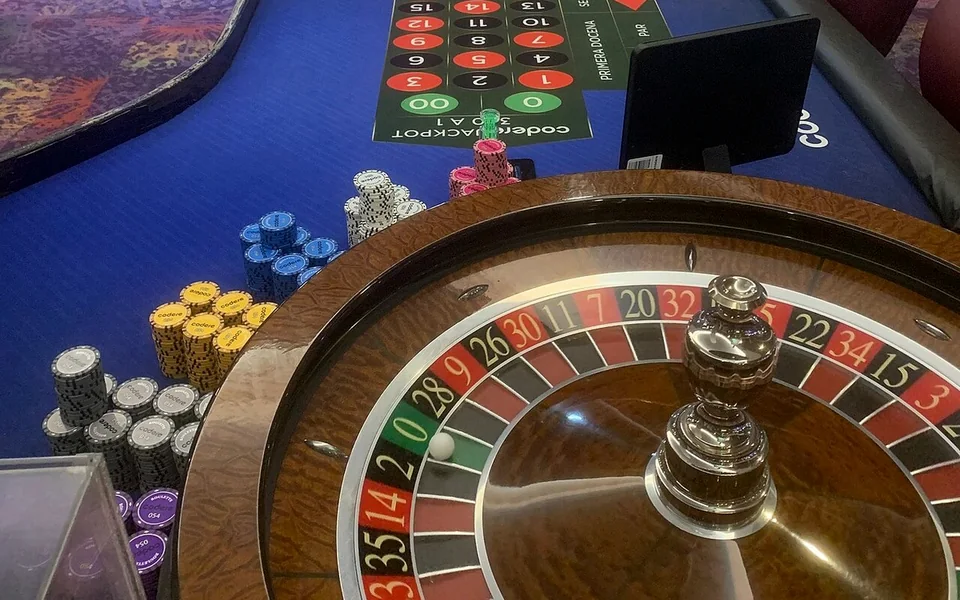
On this page — 11 sections
Updated:
Best Online Gambling Sites 2026
10 sites · checked


Order is set by our published method — payout record, licence, banking and complaint history. Links marked «Visit site» are commercial. How we rank
A History of Roulette
The origins of roulette are perhaps completely unknown to the rich history of roulette. They transfer to their online accounts through companies created in 2015, while sitting in front of a laptop created in 2016 in an apartment created in 2017. This change was added to play a game that is said to have been invented in the 1600s! Roulette is truly captivating. Its appeal is enhanced by the mystique that surrounds its origins. There are many theories as to how this remarkably popular game came to be, some of which you may or may not have encountered before. For those unfamiliar, get ready and we'll go through it briefly.
Roulette is simply captivating. What makes it even more intriguing is the mystique surrounding its origins. There are a number of theories as to how this wildly popular game came to be that you may or may not have heard before. For those of you who have not, buckle up and we will run through them briefly.
The Pascal Theory
The most popular and widely accepted theory regarding the origins of Roulette is that of a French mathematician, scientist, and all around genius named Blaise Pascal. Roulette - which loosely translates from the French as -little wheel- - is said to be the brainchild of Pascal, who originally intended to create a perpetual motion machine (well done, Blaise).
Soon after Pascal rolled out his invention (pardon the pun), Parisian casinos began attracting crowds with the curious game. Suffice it to say, it went down quite well with gamblers and the casinos, who made some tasty profits on the players' fixation with roulette.
Over four centuries later, the game is still making us fall in love with it. Talk about staying power-¦
Alternative Theories
Of course, there are many who dispute Pascal as the originator of the idea of roulette. Well, in the sense that he basically "borrowed" the concept from French monks, who in turn borrowed the idea from their Tibetan brethren. The Tibetans are said to have played an ancient Chinese game in which 37 animal figures were rearranged into a magic square.
There are also theories that a less developed version of the game was played in ancient Rome. As with anything ancient, the Greeks have been cited as the potential inventors of Roulette. The list goes on and seems destined to be disputed by some. For now, we will move on and leave you to do your own research, Colombo.
What Makes Roulette So Popular?
The popularity of Roulette has exploded over the past decade. Few would argue that the surge in demand for the game has been fueled by online players. With the advancement of online casino technology and the massive growth of online casinos in general, more players have access to the game.
For many players, their first foray into Roulette can be through chance or word of mouth. In other words, a novice player may come across the game while placing a sports bet at a casino and enjoy it, or it may be recommended by a friend. But what is it that makes Roulette so compelling? Why do players keep coming back for more?
Is Roulette an Easy Game?
Yes, it is. Roulette is not considered to be a difficult game to play if you just plan on throwing money on the table. It is not uncommon for casual players to bet $20 on 5 different numbers and hope for the best. It is far from difficult in that sense.
Roulette is such a social game when played in a land-based casino. If you have ever been to a busy casino, you may remember the image of all sorts of people huddled around the wheel, having fun. This is another reason why many people keep coming back. When you combine ease with fun, you tend to have a good time. For many Roulette players, it is the pursuit of entertainment that draws them to Roulette.
For others, however, the game is no laughing matter. Beating the house and winning money is where the real excitement lies.
Roulette: The Fundamentals
So there is a wheel, a table, and some chips, right? Yes, but there is more.
Do you want to maximize your chances of winning at Roulette? The first step is to learn everything you can about the game. Knowing each and every component that contributes to roulette will undoubtedly help you find the right strategy.
First things first, let's take a look at the roulette wheel.
The Wheel
The roulette wheel is essentially broken down into three different parts.
- The outer track is where the ball rolls around
- The base track, where the ball descends
- The head of the wheel, which the ball will hit before falling into a pocket
Where the ball lands will determine which number, color, or section of bets will win.
The Table
The table is where bets are placed. There are several types of bets you can place, which we will cover below. As there are differences in the layout of the table when playing American Roulette and European Roulette, we will break down both separately.
Odds and Bets on American and European Roulette
Did you know that where you are in the world can affect the type of roulette you play? For players in Europe, playing roulette is a little different than playing roulette in the USA. Americans do things better, according to some. Then there are others who will tell you that Europeans simply do some things better than Americans. Not much, granted. Well, maybe sports cars and food. The point is that things are usually a matter of opinion.
However, given the choice between the European version of Roulette and its American sister, the European version will generally win out for most players. In many countries around the world, the European version is the most widely played. There are reasons for this, which we will look at in detail below, that are very beneficial to know.
First, let's take a look at the differences between the types of bets and the odds you can earn on each winning bet.
American Roulette
American Roulette Wheel
The American version of Roulette allows players to bet on 38 separate pockets. There is a single zero (0), a double zero (00), and 36 numbers (1-36). The numbers are arranged in a different order around the wheel than in the European version.
Bets on American Roulette
When playing the American version of Roulette, you have the option of placing either inside or outside bets. This can really add some fun to the proceedings!
It is important to understand the difference between the two. Basically, inside bets refer to those placed "inside" the table. These bets are those placed directly on a single number or a combination of numbers, such as a split. Outside bets are those placed on red-black, high-low, 1-12, and so on.
Inside Bets
There are different odds depending on the type of bet you place. Inside bets have the higher odds and are where the real action takes place. These include the following.
Straight-Up Bet - A bet on any number on the roulette table between 0, 00 and 1-36. Odds are paid at 35-1 for predicting the winning number.
Split Bet - A bet on two numbers - for example, 8 and 11. You simply place your chip on the line separating the two numbers, and voila! The odds of winning a split bet are 17 to 1.
Straight, Three-Number, Side Bet - This is essentially a bet on three numbers. You make this bet by placing the chip on the corresponding row of that set of numbers. For example, you could bet on 16, 17, and 18. The odds of winning this type of bet are 11-to-1.
Corner, Square, Four-Number Bet - A bet on four numbers that is placed by placing your chip on the intersection of any two numbers that form a square. For example, you could bet on 20, 21, 23, and 24. The odds on this bet are 8 to 1.
Five Number Bet - This type of bet is unique to American Double Zero Roulette. It is known as the "Monster Bet" and includes 0, 00, 1, 2 and 3.
Line Bet, Six Number/Six Line Bet - You place your chip on the outside of the six numbers of your choice. For example, you could bet on 16, 17, 18, 19, 20, and 21. The odds on this type of bet are 5-1.
Outside Bets
These are typically bets with smaller payouts. They include the ones below.
Red or Black Bet - As simple as it gets. You choose between red or black and win even money if you are successful.
Column Bet - This is another simple bet. You simply bet on one of the three columns at the bottom of the table. The odds on this type of bet are 2-1.
Dozen Bet - Do you think the first dozen numbers will win? Simply place your chip on either the 1st, 2nd or 3rd dozen, and if you are correct, you win at odds of 2 to 1. Note that 0 and 00 do not count in this bet.
Odd or Even Bet - Since there are 36 numbers on the table (0 and 00 do not count), you can choose whether the next number will be an odd or even number. For example, 1 is an odd number, while 18 is an even number. The odds on this type of bet are 2 to 1.
High or Low Bet - You place this bet on either the 1 to 18 or 19 to 36 section of the table. The odds on this type of bet are even money.
European Roulette
European Roulette is the standard version of the game for many players around the world. It is the original and the best, according to some roulette enthusiasts. When playing the game, there are certain things that support this sentiment.
Perhaps the most important difference to discuss is the house edge. In the European version, the house edge is much smaller than in its American sister. American Roulette has an extra pocket on the wheel - which decreases your chances of winning - but pays the same as European Roulette for a win on a number.
European Roulette Wheel
The European version of Roulette allows players to bet on 37 separate pockets. There is a single zero (0) and 36 numbers (1-36). The numbers are arranged in a different order around the wheel than in American Roulette.
Bets on European Roulette
No matter what type of roulette you play, inside bets have the higher odds and payouts. These include those listed below.
Straight-Up Bet - The easiest bet to place. A Straight-Up is simply a bet on any number on the roulette table between 0 and 1-36. The odds paid for predicting the winning number are 35-1.
Split Bet - A bet on two numbers. For example, 2 and 5. You simply place your chip on the line separating the two numbers, and voila! The odds of winning a split bet are 17 to 1.
Straight, Three-Number, Side Bet - A bet on three numbers. You make this bet by placing the chip on the corresponding row of that set of numbers. For example, you could bet on 16, 17, and 18. The odds of winning this type of bet are 11-to-1.
Corner, Square, Four Number Bet - Want to bet on four numbers at once? Simply place your chip on the corner of any four numbers that form a square. For example, you could bet on 20, 21, 23 and 24. The odds on this bet are 8-to-1.
Line Bet, Six Number/Six Line Bet - A pretty cool bet. You place your chip on the outside of the six numbers of your choice. For example, you could bet on 16, 17, 18, 19, 20, and 21. The odds on this type of bet are 5-1. Outside Bets These are typically bets with smaller payouts. They include the following.
Red or Black Bet - The most common outside bet. You choose between red or black and win even money if you are successful.
Column Bet - Again, a very self-explanatory bet. You simply bet on one of the three columns at the bottom of the table. The odds on this type of bet are 2-1.
Dozen Bet - Do you think the first dozen numbers will win? Simply place your chip on either the 1st, 2nd or 3rd dozen, and if you are correct, you win at odds of 2 to 1. Note that 0 and 00 do not count in this bet.
Odd or Even Bet - Since there are 36 numbers on the table (0 and 00 do not count), you can choose whether the next number will be an odd or even number. For example, 1 is an odd number, while 18 is an even number. The odds on this type of bet are 2 to 1.
High or Low Bet - You place this bet on either the 1 to 18 or 19 to 36 section of the table. The odds on this type of bet are even money.
Bonus Bets:
These types of bets are unique to European roulette.
La Partage and En Prison are not always active in every game of European Roulette. If you are in a land-based casino or playing online, these bets are mostly at the discretion of the casino.
For those unfamiliar with these bets, here is how they work.
La Partage - La Partage is a bet that is triggered when 0 wins. If the player has placed La Partage (which roughly translates as "The Split"), half of their even money bets will be returned to them.
This bet is positive for two main reasons:
- A) It acts as an insurance bet when 0 comes up
- B) It can reduce the total house edge to 1.35% when activated;
En Prison - En Prison (basically "In Prison") is a rule that also applies to even money bets when 0 wins. How it works is that the dealer places a marker over the previous even money bet when zero comes up. If the player wins on the very next spin, they get their bet back. Pretty cool, huh?
The House Edge
The house edge is a very important aspect to consider when playing any type of casino game. It can be the difference between making some serious money and losing enough to end your night.
In Roulette, there is a noticeable house edge when playing American Roulette. The higher the edge a casino has over a player, the lower your chances of winning. Many players will actively avoid American Roulette simply because of the higher house edge. After all, no one likes to give away an advantage when it comes to money.
So how do we break down the difference in the house edge between American and European Roulette? The easiest way to determine the house edge is to break down the odds and bets in both versions of Roulette, as we have done below.
House Edge in American Roulette
American Roulette has a total of 38 numbers, including 1-36, zero, and double zero. This represents 38 possible outcomes, with single number bets paying odds of 35-1. Since there are 38 possible outcomes, and you are paid odds that represent only 36 numbers, the zero and double zero make up the casino's edge over a player.
The house edge works out to double what a casino has over a player in European Roulette. Instead of having an edge of 2.70%, the presence of the double zero brings it up to 5.26%. Players who refrain from making inside bets will therefore lose every time a zero or double zero comes in.
Below, you can find the probability of winning on each bet in American roulette.
| Type of Bet | Odds | Probability |
| Odd | 1:1 | 46.37% |
| Even | 1:1 | 46.37% |
| Black | 1:1 | 46.37% |
| Red | 1:1 | 46.37% |
| 1-18 | 1:1 | 46.37% |
| 19-36 | 1:1 | 46.37% |
| 1-12 | 2:1 | 31.58% |
| 13-24 | 2:1 | 31.58% |
| 25-36 | 2:1 | 31.58% |
| Single Number | 35:1 | 2.63% |
| Combination of two numbers | 17:1 | 5.26% |
| Combination of three numbers | 11:1 | 7.89% |
| Combination of four numbers | 8:1 | 10.53% |
| Combination of six numbers | 5:1 | 15.79% |
| Combination of 1-2-3-0-00 | 6:1 | 13.16% |
House Edge in European Roulette
In European Roulette, there are 37 possible outcomes. Since the wheel has 37 pockets, players bet on the outcome of a spin in which a ball lands in one of the pockets. These pockets are numbered from 0 to 1 to 36.
The odds paid on a winning number are 35-1. This means that for every dollar placed on a winning number, a player will receive 35 times that amount. These are the odds based on the 37 numbers on the wheel, including the zero. The zero is an extra outcome that is not included in the odds paid. This is effectively the house edge.
Players who choose only outside bets will only lose if a zero comes up, as there is no double zero. Thus, the house edge in European Roulette is reduced to 2.70% from the 5.26% the casino enjoys in the American version.
Below, you can find the probability of winning on each bet in European roulette.
| Type of Bet | Odds | Probability |
| Odd | 1:1 | 48.6% |
| Even | 1:1 | 48.6% |
| Black | 1:1 | 48.6% |
| Red | 1:1 | 48.6% |
| 1-18 | 1:1 | 48.6% |
| 19-36 | 1:1 | 48.6% |
| 1-12 | 2:1 | 32.4% |
| 13-24 | 2:1 | 32.4% |
| 25-36 | 2:1 | 32.4% |
| Single Number | 35:1 | 2.7% |
| Combination of two numbers | 17:1 | 5.4% |
| Combination of three numbers | 11:1 | 8.1% |
| Combination of four numbers | 8:1 | 10.8% |
| Combination of six numbers | 5:1 | 16.2% |
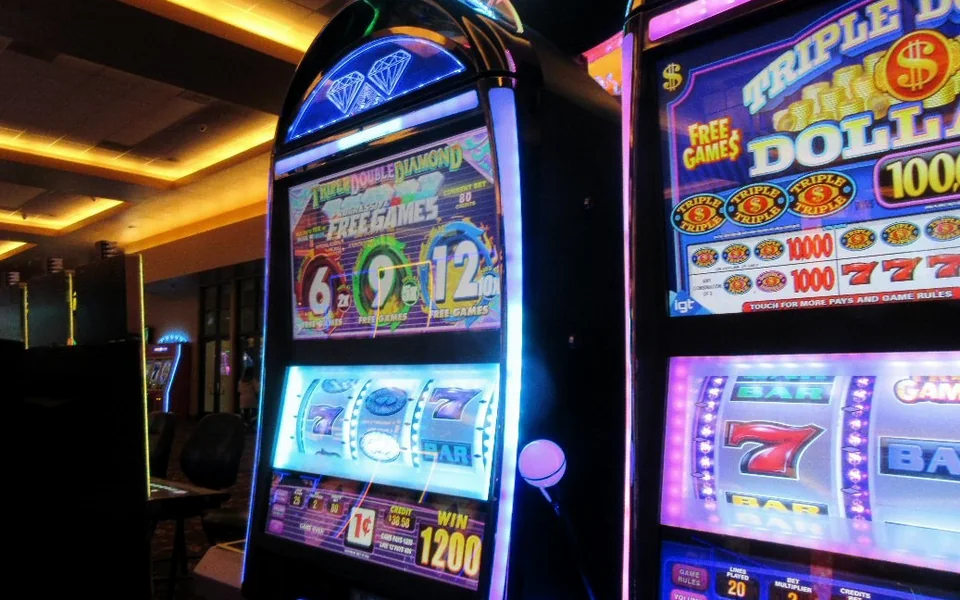
Roulette Strategies and Systems
For many roulette enthusiasts, playing with a strategy is the sensible option. These people enjoy the game just as much as others who play for fun. It can be argued that there is nothing more enjoyable than seeing a strategy pay off time and time again. If it were that easy, casinos would either change the game completely or go out of business. Roulette is essentially a game of chance.
However, some people have their own way of playing the game. Whether it is American Roulette or European Roulette. They may prefer to just close their eyes and throw their chips all over the table (not recommended!), or they may think of eight people close to them and bet according to their birthdays (not recommended for anyone with octuplets). Either way, it is your decision.
There is no right or wrong way to play roulette, but if you want to improve your chances of winning, using a strategy can help.
The Martingale Strategy
So let's start with the most renowned of roulette strategies, the Martingale.
As with many things related to gambling, no one is quite sure who invented this system. While the name "Martingale" may conjure up images of some cool Edwardian customer smoking a pipe and single-handedly bringing down casinos with his ingenious system, we are sorry to disappoint you.
Roulette historians believe that the Martingale can be traced back to an English casino owner in the 1800s who had a particular obsession with roulette. This man's name was Henry Martindale - yes, Martindale - but somewhere along the way, someone made a hash of his last name. Others have alternative theories as to who was behind the Martingale System. If detective work is your thing, you may have a shot at cracking the case! How the Martingale Strategy Works You may have some questions, such as, what does this mysterious and esoteric system involve? Or do I need a map and compass?
The answer is no. The Martingale system basically works like this: once you lose a bet, you double your bet up to a house limit of either 100, 200, or 400. This is about as complex as apple pie and ice cream. As simple as it may seem, this system works on the logic that you want to get ahead of where you started, but it relies on a reasonable bankroll or a nice streak of luck. Sometimes both.
In order to play with the Martingale strategy, you will follow a pattern similar to this:
Your first even money bet of $10 loses, so you make the same bet, but this time for $20. If it wins, you are up a total of $10. If it loses, you bet $40. The goal is to incrementally increase your winnings by $10 at a time, which sounds simple. The problem is that you can go on a losing streak that could wipe you out in no time. Pros and Cons of Martingale The house edge remains the same with the Martingale system, but you can win the majority of your sessions if you follow the basic principles. In many cases, this can be over 90%, depending on the casino's maximum bet.
Sounds perfect, right? Nope. Not even close. If you have a losing streak, you are potentially screwed. If luck is not on your side and you end up losing, say, 8 times in a row, your bankroll could resemble nothing more than a handful of Scotch mist.
There are pros and cons to Martingale for players who can afford a rough streak. If you are looking to rack up big wins as quickly as possible, this may not be for you. Does the Martingale work on straight bets? You can certainly use the Martingale on straight-up bets, but it can be a very costly session if you are not lucky.
For example, if you decide to try the strategy on one number, say 3, you will not bet on any other numbers. The odds of winning on 3 are 35 to 1. You will wager 10 units, or $10 per spin.
Even if you are incredibly lucky and get a 3 on the first spin, you will continue to bet $10 on the 3 until it comes up again. The first win gives you $350 (35-1), so you have 35 bets to break even. If you make it through the 35 bets, you must then increase your bet to $20, as you are now on the 36th spin. If 3 does not come up for another 18 spins (the amount needed to make up the $350 loss), you will be down 710 units, or $710.
Unless you have enough money to cover your losses, it is probably not a good idea to try this. The Grand Martingale If the Martingale is like a slightly spicy appetizer, then the Grand Martingale will make you reach for a cold glass of milk. In this version, you do not double your losing bet. You go even further by increasing your next bet. For example, a 10 unit losing bet is replaced by a 30 unit bet, which is then pushed even higher. Some can push this as high as 1000 units, which can be disastrous.
Because you will hit the house's maximum bet much sooner, your winning streaks will not be as frequent. The idea is to double-plus your following bet, which can be very dangerous. The house edge does not improve at all, so you are basically hoping for a Hail Mary shot over and over again.
The Labouchere Strategy
Depending on who you ask, you will be told that a certain gambling strategy is a way to make free money.
The "secrets" that many gambling "experts" try to sell you for ridiculous prices are usually not so secret after all. One of the main strategies used by these charlatans is the so-called Labouchere strategy. Henry Labouchere is the man who is credited with creating this gambling system. The Frenchman was known as a gambler who reportedly traveled the world in search of big wins (long before online gambling).
However, Labouchere did not create this system (shock horror). The strategy was actually a mathematical system created by the Marquis de Condorcet in the 1700s.
How It Works
It is important to note that this strategy does not change the house edge or give you any tangible advantage. While there are variations of this strategy, we will take a look at the most commonly used. This progressive system is designed to work on even money bets. You can use it when placing bets on the inside of the table, but doing so can result in significant losses.
To begin, you must set your goal. This goal represents how much you want to win. Then you break it down into smaller numbers. For example, you want to win $100. The numbers below represent that goal:
10 -€“ 10 -€“ 10 -€“ 20 -€“ 20 -€“ 20 -€“ 10
It is up to you to decide what your goal is and how you want to separate the numbers. Once you have done this, select the first and last number in the sequence and combine them. This number will be your first spin. According to the sequence above, this will be $20. If you win - for example, on a red bet -, you will cross those numbers out of the sequence. This means that you have achieved part of your goal.
Your sequence should now look like this:
10 -€“ 10 -€“ 20 -€“ 20 -€“ 20
The second step is to combine the first and second numbers in the new sequence (10 and 20). 10 + $20 = $30, and this is your next bet. Continue following the sequence until you have crossed off all the numbers. When there are no numbers left, you should have achieved your goal.
If you have lost a bet, you do not cross out any of your numbers. You add the number you bet on to the right side of the row. This should be included in the bet, as you will need to make up the lost amount.
If you had lost your first bet, for example, your sequence would look like this:
10 -€“ 10 -€“ 10 -€“ 20 -€“ 20 -€“ 20 -€“ 10 -€“ 20
The Labouchere system is fairly easy to master. Remember that when you win, you simply cross out the numbers to the left and right of your sequence. If you lose, you do not cross out any numbers, but instead add the bet to the right side of your sequence.
The Pros and Cons
The system does not affect the house edge, as mentioned above, but it does add an element of fun. As with any break system, it provides a cool way to keep track of your bets. For those who like structure in their games, this system certainly provides it.
When playing the Labouchere system, you will not have any significant advantage over a casino. You will win some and lose some, just like any other betting system out there.
The D'Alembert Strategy
This strategy, also known as the "Gambler's Fallacy," is perhaps the simplest of all. The D-Alembert strategy is named after its creator, French mathematician Jean-Baptiste le Rond d-Alembert. In essence, D-Alembert based his theory on a belief held by just about every roulette novice: -Tom, if red has come in 8 times, black is bound to come in next. Here, watch me put my last $200 on black.-
Of course, red comes up again - or in really unlucky cases, zero comes up - which means Tom has no money left in his bankroll. Poor Tom. Essentially, Tom fell for the gambler's fallacy, or in other words, the belief that equilibrium will always find a way to triumph over chaos. In roulette terms, chaos would be represented by an extraordinary sequence of even money bets - such as red or black bets - favoring one color.
How Does It Work?
With the D-Alembert strategy, the concept is that you should naturally win about the same number of even money bets that you lose. In other words, things should eventually balance out.
The way the system works is like this:
- You choose a base betting unit, such as $10. Next, you place your first bet (red or black, or any other even money bet) at that value
- if you lose, you increase the bet by one unit. In this example, a loss means betting $20 on the next spin
- if you win, you decrease the bet by one unit
- a win with a bet of one unit remains at the base value, which is $10;
Pros and Cons
Unlike other systems such as the Martingale, if the base unit is not excessive, significant losses should not occur. While there is a chance that you could end up on a dreaded losing streak, provided you are sensible with your base bet, you should only suffer minor losses.
Things can get out of hand if you deviate from the rules, however, as this is a progressive system.
The Paroli Strategy
This system has such a traditional Italian sound to it, but in truth, no one is sure where it came from. The Paroli System - or Reversed Martingale - is most commonly used in Roulette, but is also used by others who play Baccarat. It is essentially a basic strategy that is designed much like any other positive progressive betting system.
The purpose of the Paroli betting system is to get three consecutive wins. Your bet must then be doubled with each individual win. To accomplish this, a player will wager one unit on an even money outcome, such as "higher". If the player loses, they will repeat the same bet with one unit. This method continues until a player wins.
Once a win is achieved, two units are bet. If this bet is not successful, the bets revert to one unit. If the two unit bet wins, the next bet is doubled to four units. This will be the last bet in the sequence as it is a three step bet. In the worst case, the desired result is a net loss of one unit or a profit of seven units. Once the sequence is completed, the player starts over.
Pros and Cons
Like other betting systems out there (understatement of the year coming), a string of losses can really be the killer. The obvious advantage of this strategy is that you will never place a bet that is four times your base bet. Most of that, in theory, should be accumulating winnings rather than your starting bankroll.
Due to the nature of the system, wins and losses will not be severe in theory. If you adjust your bets and get carried away, this can change.
Alternative Roulette Strategies
Oscar's Grind Strategy
This is similar to the D-Alembert we covered above. Like most of these strategies, the Oscar's Grind works as an even money betting system. You will play through this strategy in four steps, which you should break down as you go along.
Simply put, a player increases their bet by 1 base bet in each step until they reach the fourth and final step. Losses mean that the stake remains the same. Your goal should be to win 1 unit each time, which will keep you at 1 base bet. This is the same even if you reach the fourth game. In essence, players will always return to the first level as long as they have made a profit of one unit. No matter where you are in the four steps, you will return to the beginning once you have done so.
For example, your base bet is $10. You will continue the session as follows if the following scenario occurs:
- Place a $10 bet and lose
- Place a $10 bet and lose
- Place a $10 bet and win
- Place a $20 bet and win;
For a loss, the stake remained the same. With a win (step 3), we increased the bet to $20 (2 units). When the $20 bet won, we made a profit of +1 unit, so we went back to step 1.
Pros and Cons
This is a simple strategy that appeals to the logical brain. It may seem like the perfect way to play - or so some will tell you - but it is just like any other system: you will eventually lose.
The way this system is designed, even a run of 4 or 5 losses can deplete your bankroll. When this happens (not if, but when), you will probably be tempted to increase your bets. This can get a player into even more trouble.
Chaos Theory
If you like to tell it like it is, then this system is probably right up your alley. The concept of using roulette to fight capitalism is, well, pretty silly. However, the idea of manipulating a casino's advantage and bending it in your favor is not really something most gamblers would laugh at.
In fact, they would probably bite your hand off for the information. Figuratively speaking, of course. Nobody likes a cannibal in the casino, and the "one-armed bandits" (slot machines, for those unfamiliar with the British term) have that niche covered.
Chaos theory sounds a lot more exciting than it really is. As a strategy, it is basically a means of fighting fire with fire. If a roulette wheel is random - and as such has no predictable patterns - then studying things like the speed and velocity of the ball will help you determine where it will fall next.
While a team of scientists put the theory to the test and got results of about 60% positive predictions, this was done on a wheel outside of a casino. In an online casino - especially with random number generator software - you will not have much luck.
Pros and Cons
We would like to tell you that this is a proven strategy that will make you millions, but it is not. In fact, it is just like any other roulette strategy, where in the end the house edge is the same and you are relying on luck.
Online Casino Roulette
If you want to try these strategies, or perhaps give European Roulette a try over American Roulette, you will need to register an account with an online casino.
No one should be at a loss when looking for an online casino to play at. These days, there is a plethora of sites out there, all vying for your patronage. In order to get players to sign up, most casinos offer welcome packages consisting of bonuses, free bets, matched deposits and more.
Beware of the Bonus
Bonuses tend to vary from site to site. Some look more promising than others from a distance, while bonuses that look small in comparison can often represent better value. The best way to understand a bonus offer is to read the terms and conditions of the bonus itself. More often than not, these bonuses have a turnover or wagering requirement. Typically these can range from 20x to 50x. Anything over 50x is usually considered to be poor value.
Most bonuses are Matched Deposits. These require a player to make a deposit that is then matched. For example, if you deposit $20, you will receive $20 in bonus money. Often the combined value of the bonus and your deposit will be the amount that must be turned over before you can withdraw any money.
Consider the Bigger Picture
When considering a site to play at, do not be lured by offers that seem too good to be true, because they often are. Instead, judge a site by its online reputation, check its security features, look at the quality of its games and software providers, and study its terms and conditions.
Bonuses can be an excellent way to boost your bankroll. However, this is not always the case. It is always best to read the terms and conditions of a bonus before signing up at a casino.
RNG Roulette
For those accustomed to playing roulette in a land-based casino in Las Vegas or Atlantic City, for example, playing roulette online is completely different. In some cases, it does not have to be. There are two main types of roulette that you will find in an online casino. Random Number Generator (RNG) Roulette is the main one.
RNGs are essentially programs that randomly select numbers when you play Roulette. The program software will then play out the sequence of the roulette wheel spinning around before landing on a particular slot. This is done at a rapid pace, allowing a video graphic to be played for the player to see (even if the winning sequence has already been determined). RNG software, like any computer program, is prone to bugs and glitches. For the most part, everything should be completely random.
Live Dealer Roulette
Since the beginning of the 2010s, Live Dealer Roulette has become increasingly popular among casino enthusiasts. Players who prefer the natural pace of the roulette wheel and the presence of real dealers tend to enjoy playing this version online.
Once the bets are placed, the video feed shows a close-up of the wheel. Players can then watch the game unfold as they would in the confines of a land-based casino. There is a more social aspect to this game. Not only is it more natural (it is a replica of a real casino), but there is usually a chat option where players can communicate with the dealer.
RNG Roulette vs. Live Dealer
When it comes to choosing between the two, it is purely subjective. Some players enjoy RNG Roulette because it is a more private and faster experience. A typical RNG game begins when you alone have placed your bets and selected "Spin." This level of control and faster pace is preferred by those who want to play games in quick succession and perhaps on the go.
Live Dealer Roulette is a more authentic experience. The presence of a real wheel, live dealers, and the visual familiarity is comforting to some players. Those who are skeptical of RNG software may prefer to play online roulette this way. Provided the odds and payouts are the same in the game you choose, live dealer roulette is as close to the real thing as you can get.
Conclusion
Roulette is a truly wonderful game and one that will continue to grow in popularity. Due to its relative simplicity and high-risk/high-reward nature, players of all backgrounds and nationalities enjoy the experience of the spinning wheel.
It can be surprising for some to learn just how old roulette is. The game as we know it has been around for a long time and continues to attract new players every day. With the advent of the Internet, more and more gamblers have flocked to the tables and lobbies of online casinos.
While many play Roulette simply for fun, others prefer to employ strategies designed to beat the dealer and win big. Regardless of the different systems and strategies, however, the house edge will always remain. As time goes on, more and more players will try their best to be the one to break this rule.
Checked by the USOnlineCasinos deskLedger entry updated . We re-open every page when a licence, a payout rule or a banking limit changes — the date above is the last time this one was verified against the operator. Our method · Report an error