Overview of Blackjack
Here you will learn about the game of blackjack and everything you will need to know in order to get started. Also, find out some basic strategy advice.
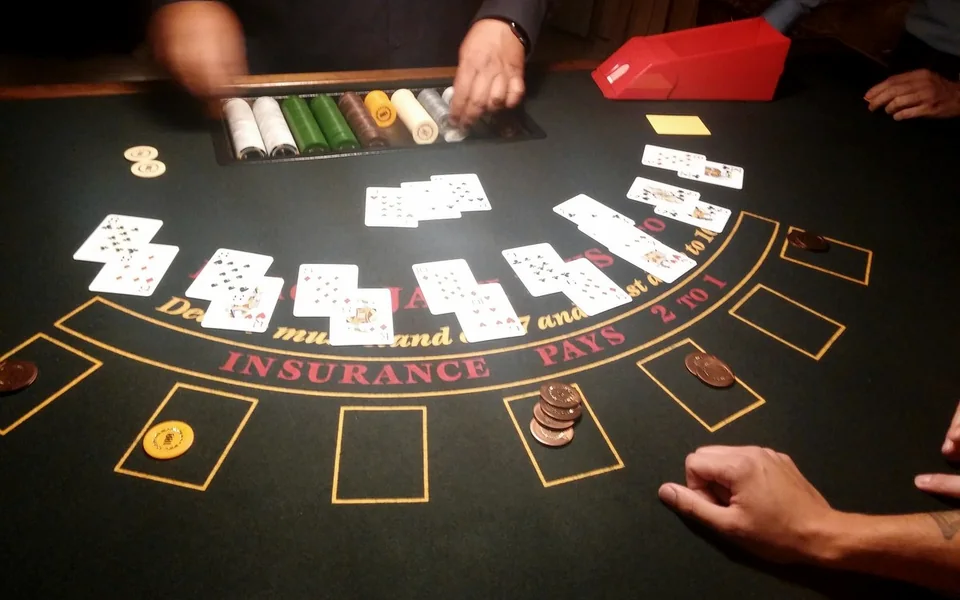
On this page — 6 sections
Updated:
Games similar to Blackjack have been around since the 15th century, but the main antecedent of today's casino favorite was a 17th century game known as "Venti-Un." Like Blackjack, the object of this game was to get as close to 21 as possible without going over, and Aces were worth either 1 or 11 points.
The game came to the United States in the early 1800s, brought by French colonists who settled in New Orleans. From there, it spread across the country, eventually appearing as a legal betting option in Nevada in 1931.
While Blackjack has evolved over centuries, the current version bears only a passing resemblance to its Old World counterpart. It has been refined and modified by casinos and players alike, both seeking the perfect balance of skill and chance.
The result is a classic table game that can be found in almost every land-based and online casino around the world. Even those who know nothing about gambling have a basic idea of how to play the game, and the rise of the Internet has provided ample opportunities for fledgling card players to hone their skills.
In this article, we will provide an overview of blackjack, from the rules of the game to the art of card counting. We will also include an example of basic strategy, as well as mentioning some of the most popular variations.
Best Online Gambling Sites 2026
10 sites · checked


Order is set by our published method — payout record, licence, banking and complaint history. Links marked «Visit site» are commercial. How we rank
Rules of Blackjack
A typical Blackjack session is dealt from a standard 52-card deck, and anywhere from 1 to 8 decks may be used by the casino. Regardless of which variation is being played, the goal is always the same: to get a higher total than the dealer without going over 21. If the player exceeds this amount, he is busted and automatically loses. Winning is fun.
Here is a breakdown of the various card values in blackjack:
| Card | Value |
| 2 -€“ 10 | Face Value in Points |
| King, Queen, or Jack | Ten Points |
| Ace | One or Eleven Points |
When a player has an Ace and a 10 of any value, he is said to have "Blackjack". This is the best possible hand for a player. In most versions, a Blackjack pays 3-to-2, while any other win results in an even money payout. In a tie, the result is called a "push" and no money changes hands. The choice of bets is crucial.
Players begin the game by placing their bets. Each specific casino table has minimum and maximum bet limits, so be sure to learn this information before starting.
After the initial bets are placed, each player at the table is dealt two cards. The player's cards are dealt face up, while the dealer takes one down (hole card) and one up (upcard). A major exception to this rule comes in the European version of Blackjack, where the dealer must wait until the players have completed their hands before drawing his second card. Winning strategies vary.
If the dealer's upcard is an Ace, the player has the option of purchasing insurance against a dealer Blackjack, if the casino rules allow it. In this scenario, the player is allowed to make an additional bet up to half of the player's original bet. If the house has Blackjack, the insurance bet pays 2 to 1 and the hand is over. However, the casino loses the bet and the hand continues.
If the dealer's upcard has a value of 10 points, he immediately checks his hole card for a possible blackjack. If this is the case, the dealer tells everyone the bad news and collects all bets. The only exception is when a player also has a natural Blackjack, resulting in a push (or tie). Luck plays a role.
Once a player discerns their cards, as well as the dealer’s up card, they have the subsequent options:
| Hit | The player takes an add'l card. |
| Stand | The player receives no add'l cards. |
| Split | The player splits matching cards into two hands.* |
| Double Down | The player doubles his wager and takes an add'l card. |
| Surrender | The player gives up, losing half of his initial bet. |
*Some special rules apply. In order to split, the player must place a wager equal to their initial bet and take one additional card per hand. Different casinos have different split protocols.
After all players have completed their hands, the dealer will reveal his hole card and continue until he meets the house's requirements. This usually means that the dealer will continue to draw until he reaches a total of 17 or more (or bust).
If the dealer goes bust, any player who didn't go bust is paid even money on their bets. Otherwise, the dealer's total is compared to each player's total, and the higher hand is declared the winner. Strategies can be complex.
Once all necessary payouts have been made, the dealer prepares to deal a new hand.
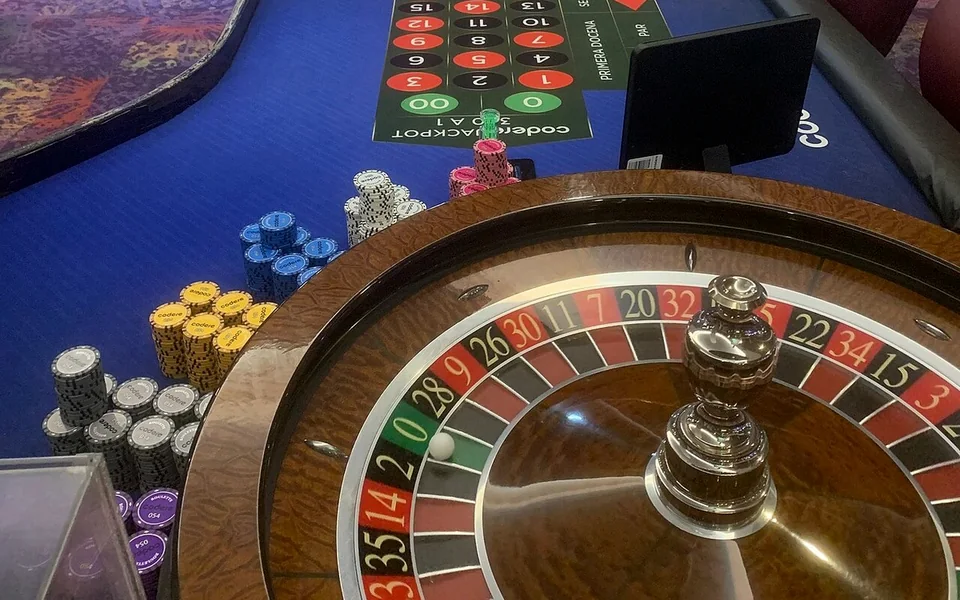
Blackjack Odds
The odds of winning a game of Blackjack can vary depending on a number of factors. When trying to figure out your odds, the following should always be taken into consideration:
- Whether the player loses all bets on a dealer's blackjack, or just the initial bet
- The number of resplits allowed
- Whether the player can resplit aces
- Whether a player's blackjack pays 6:5 or 3:2
- The number of decks used by the house
- Whether the dealer hits or stands on a soft 17 (this is a 17 that includes an ace)
- Whether the surrender rule is allowed
- If the player splits aces, can he hit?
- After a player splits, can he double down?
Now let's take a look how the number of decks can influence the house edge:
| # of Decks | House Edge |
| 8 decks | 0.65% |
| 6 decks | 0.64% |
| 4 decks | 0.60% |
| 2 decks | 0.46% |
| Single-deck | 0.17% |
Even if you manage to find a casino that uses a single deck, you can expect a number of other rules to be changed in order to increase the house edge. Fortunately, Blackjack remains a better bet than most casino games, with an overall house edge that almost always falls below 2%.
Blackjack Card Counting
The art of card counting first gained national recognition with the publication of Beat the Dealer by Dr. Edward O. Thorp. This book hit the bestseller lists and convinced a surprising number of players that the casinos were ripe for the picking. However, because most lacked the discipline to read cards correctly, the casinos often had the last laugh.
In simple terms, a card counter watches the cards as they are brought into play and assigns them a value. For example, the Hi Lo system requires the following
- 2 to 6 card = +1
- 7 to 9 card = 0
- 10 to Ace = -1;
The player adjusts his total count based on the cards that are brought into play. If the count is high, the player should bet more because there should be an abundance of high cards remaining in the deck. If the count is low, the player knows that there are fewer high cards and should reduce his bet.
This art is somewhat irrelevant to online play, however, as casino software can shuffle between hands at lightning speed, rendering any count meaningless.
Basic Strategy in Blackjack
When you use basic strategy in a game of blackjack, you make decisions based on a set of parameters. This gives you the best odds for each situation, although Lady Luck can still pull the rug out from under you at any time. While there are a number of basic blackjack strategies, this is one of the simplest and most common.
A number of blackjack strategy charts exist, but let's take a look at one of the most common:
- Always stand on 17 through 20
- Hit on a total of 5 through 8
- Hit on a total of 9. Double down if the dealer shows a 3 through 6 on his up card
- Hit on a 10 if the dealer shows a 10 or ace. If your total is 11, hit the dealer's ace and double down on everything else. Stand if your total is 12 and the dealer shows a 4 through 6. Stand if you have a total of 13 through 16 and the dealer shows 2 through 6. Otherwise hit
- If you are holding A/2, double if the dealer shows a 5 or 6. Hit on any other total
- When holding an A/3, double when the dealer shows a 5 or 6. Hit on any other total
- When holding A/4 or A/5, double down if the dealer shows a 4 through 6. Otherwise hit
- When holding A/6, double on any dealer 3 through 6. Otherwise hit
- When holding A/7, double on any dealer 3 through 6. Stand on a 2, 7, or 8 and hit on a 9, 10, or ace
- When holding an A/8 through A/10, always stand
- When holding an A/A, always split
- When holding a 2/2 or 3/3, split if the dealer's total is 2 through 7. Hit on any other total
- If holding a 4/4, split unless the dealer shows a 5 or 6. If you are holding a 5/5, double on a dealer 2 through 9 and hit on a 10 or an ace. If you are holding a 6/6, split if the dealer shows a 2 through 6 total. Hit on anything else
- If holding a 7/7, split on a dealer total of 2 through 7. If you are holding an 8/8, always split. If you are holding a 9/9, split on a dealer 2 to 6, 8 or 9. Stand if the dealer shows a 7, 10, or Ace
- When holding a 10/10, always stand;
Blackjack Variations
If you want to spice up your blackjack experience, give one of these variations a try:
- Ties Win Blackjack -€“ While ties are normally a push, this online variation offers a payout of 1:2. Players may not split or double down.
- Super Fun 21 -€“ Blackjack pays even money, but a player automatically wins if they get 20 or less with a total of 6 cards. Late surrender is also in effect, meaning the player can give up (and receive half their money back) after the dealer has checked for blackjack.
- Spanish 21 -€“ The biggest difference is that the four 10 cards have been removed, and a player 21 always wins.
- Caribbean 21 -€“ The ace always counts as 1, and the highest hand-€”known as a -€œCaribbean 21-€-€”is comprised of an ace and two 10-point cards. The dealer wins all ties.
- Blackjack Switch -€“ Player is dealt two hands and can switch of the second card of each.
- Perfect Pairs -€“ Works like regular blackjack, but the player can also make an optional side bet that pays out of if their first two cards make a pair.
Any self-respecting gambler has played Blackjack at least a few times, which is why it continues to flourish amidst new casino options and increasingly sophisticated video slots. While the basics of the game can be learned by players of any skill level, the proper use of options such as splitting and doubling down requires additional patience and practice. When card counting is thrown into the mix, the game of Blackjack becomes even more sophisticated, and this can lead to advantage players actually gaining an edge over the house.
Checked by the USOnlineCasinos deskLedger entry updated . We re-open every page when a licence, a payout rule or a banking limit changes — the date above is the last time this one was verified against the operator. Our method · Report an error